
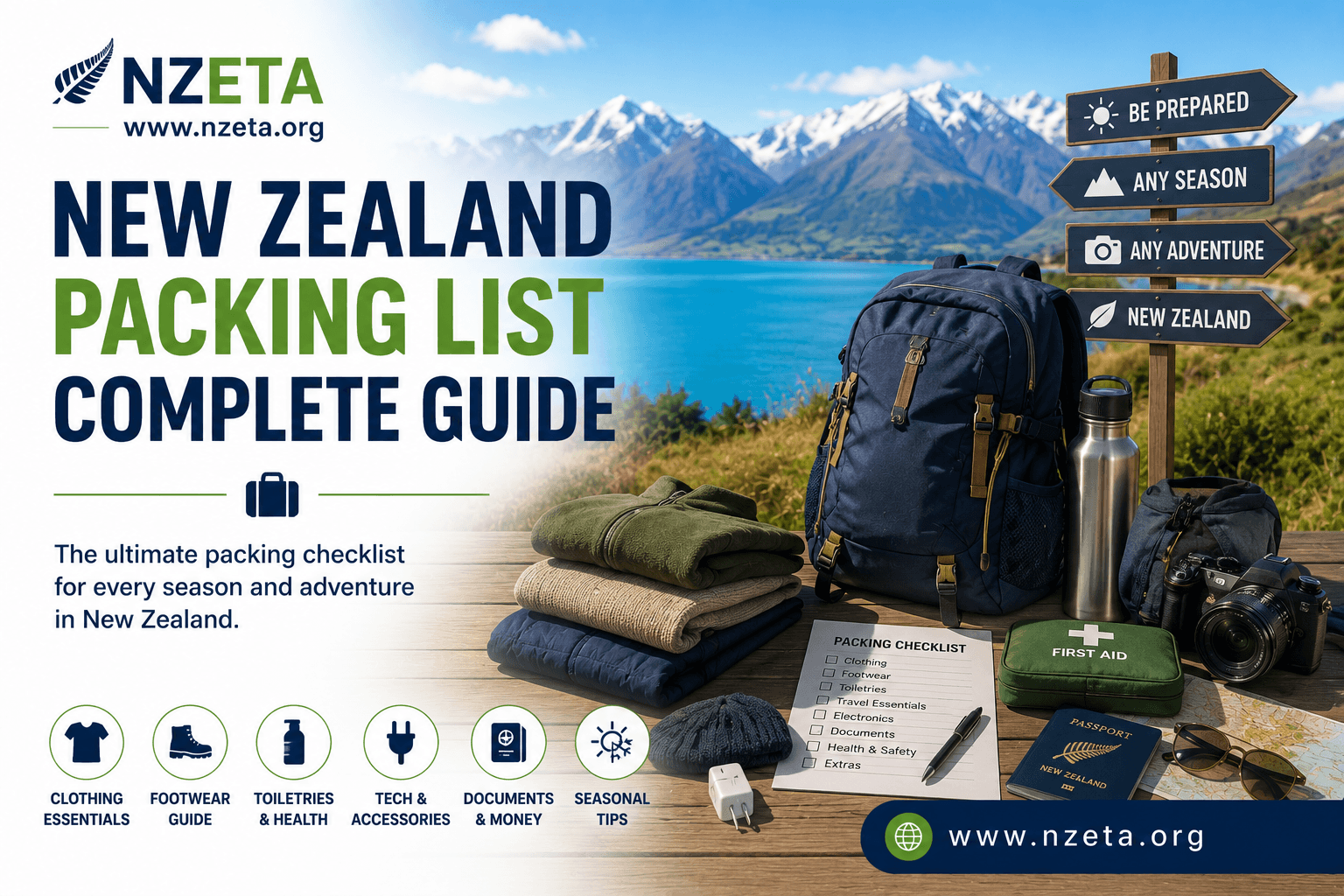
Packing for New Zealand requires balancing several considerations: weather variability, layering needs, outdoor activity requirements, and biosecurity restrictions. New Zealand's climate changes rapidly, with warm sunny days quickly giving way to cool, rainy weather. Proper packing ensures comfort across diverse conditions, from beach relaxation to alpine hiking. This comprehensive guide helps you pack efficiently for any New Zealand trip.
The Golden Rule: Layer, Layer, Layer
New Zealand weather is notoriously unpredictable. You might experience sunny beaches in the morning and cold mountain weather by afternoon. The solution is layering: wear multiple thin layers you can add or remove as needed. This approach works better than single heavy pieces. Pack lightweight sweaters, long-sleeve shirts, and rain jackets that layer under heavier coats. Cotton retains moisture; merino wool or synthetic materials dry quickly and regulate temperature better.
Essential Items for All Seasons
Documentation
- Passport (valid for 3+ months beyond travel dates)
- NZeTA approval (digital or printed copy)
- Travel insurance documents
- Driver's license + International Driving Permit
- Credit cards and some cash (NZD $200-500 recommended)
- Copies of important documents (separate from originals)
- Travel itinerary and accommodation confirmations
Toiletries & Personal Care
- Toothbrush and toothpaste
- Prescription medications (original containers with doctor's letter)
- Sunscreen (SPF 30+ - UV is intense in NZ)
- Lip balm with SPF
- Deodorant
- Razor and shaving cream
- Hair care products (available but expensive in NZ)
- Contact lenses/glasses and solution
- Basic first-aid items (bandages, pain relievers, antihistamine)
- Female hygiene products (can be difficult to find)
Clothing Basics
- 7-10 days of underwear and socks
- 2-3 pairs of pants/jeans
- 2-3 shorts
- 5-7 t-shirts or casual tops
- 2-3 long-sleeve shirts
- Lightweight sweater or fleece
- Warm jacket or parka
- Rain jacket (non-negotiable)
- Swimsuit (2 if planning beach time)
- Sleepwear
- Comfortable walking shoes
- Hiking boots (if planning serious hiking)
- Casual shoes or sandals
- Underwear and bra
- Hat or beanie (depending on season)
Electronics
- Laptop or tablet (optional but recommended)
- Phone charger (New Zealand uses 230V, Type I plugs)
- Universal power adapter
- Camera (or use your phone)
- Headphones or earbuds
- Phone portable charger/power bank
Summer Packing (December - February)
Additional Summer Items
- Light, breathable clothing (cotton or moisture-wicking synthetics)
- Shorts and skirts
- Light sandals or flip-flops
- Beach cover-up
- Lightweight rain jacket (weather still changes)
- Sunglasses with UV protection
- Sunhat or wide-brimmed hat
- Insect repellent (sand flies in certain areas)
- After-sun cream or aloe vera
Summer Packing Tip
Even in summer, bring a warm layer. Mountain regions are cool year-round, and evenings can turn chilly despite warm days. Pack a lightweight sweater or thin jacket even during peak summer.
Autumn Packing (March - May)
Additional Autumn Items
- Layered clothing (t-shirts, long sleeves, sweaters)
- Light jacket for cooler days
- Jeans and long pants
- Comfortable walking shoes for city exploration
- Light scarf (versatile for warmth and sun protection)
- Windbreaker or rain jacket
- Still bring sunscreen—UV doesn't decrease significantly
Winter Packing (June - August)
Additional Winter Items
- Heavy winter coat or parka
- Warm sweaters and thermal layers
- Thermal underwear or long underwear
- Winter socks (wool blends are ideal)
- Beanie or winter hat
- Gloves or mittens
- Scarf or neck warmer
- Winter boots with good traction (if hiking in snow areas)
- Moisturizer (heating and dry air dry skin)
- Lip balm with SPF (snow reflects UV)
Winter Note
If visiting ski regions (Queenstown, Wanaka), most equipment can be rented. Bring base layers and comfortable winter clothing; ski-specific equipment rental is economical and avoids baggage issues.
Spring Packing (September - November)
Additional Spring Items
- Layered clothing (spring temperatures vary widely)
- Light sweater and jacket
- Rain jacket (spring brings more unpredictable showers)
- Jeans and comfortable pants
- Light long-sleeve shirts
- Sunglasses and sunhat (UV intensifies as weather warms)
- Windproof jacket (spring can be windy)
Activity-Specific Packing
For Hiking & Outdoor Activities
- Proper hiking boots (break them in at home)
- Hiking socks (merino wool preferred)
- Moisture-wicking base layers
- Lightweight, packable rain jacket
- Backpack (20-30L day pack)
- Water bottle or hydration system
- Energy snacks (nuts, bars, dried fruit)
- Headlamp or flashlight
- Multi-tool or knife
- Map and compass (or offline maps)
- Sun protection (sunscreen, hat, sunglasses)
For Adventure Sports
- Swimsuit (for bungy, jet boating, water sports)
- Quick-dry clothing
- Water shoes or sandals
- Change of clothes for post-activity
For Wine Tasting
- Smart casual clothing
- Comfortable walking shoes
- Hat and sunglasses (vineyards have limited shade)
- Light jacket (tasting rooms can be cool)
What NOT to Pack
Biosecurity Restrictions
- Fresh fruits and vegetables
- Fresh or processed meat products
- Dairy products
- Eggs and egg products
- Seeds or nuts in shell
- Honey
- Soil or plants
- Animal products (hides, fur, shells)
Other Items to Leave Behind
- Large quantities of clothing (one outfit per day maximum)
- Heavy books (digital versions available)
- Excessive shoes (2-3 pairs maximum)
- Hairdryer (most hotels provide them)
- Multiple pairs of jeans (bulky and heavy)
- Formal wear unless specifically needed
- Heavy jackets (can be purchased cheaply in NZ)
Luggage Tips
Luggage Type
Carry-on only: Minimalist travelers use one small rolling bag (55x40x20cm). Works if staying shorter than 3 weeks and rewashing frequently.
Carry-on + small checked bag: Ideal for 2-4 week trips. One carry-on for essentials; one checked bag for bulk.
Checked + carry-on backpack: Best for adventure travelers planning hiking and outdoor activities.
Packing Strategy
- Roll clothes rather than folding to save space
- Wear your bulkiest items while traveling
- Pack shoes last, filling gaps with socks and small items
- Use packing cubes to organize and compress clothes
- Keep a few outfits in carry-on in case checked bags are delayed
- Leave room in luggage for purchases and souvenirs
Shopping in New Zealand
If you forget items or want to purchase items in New Zealand, shopping is available but prices are higher than many countries. Major retailers include Kathmandu (outdoor gear), Rebels (clothing), and Kmart (general merchandise). Supermarkets like Countdown and Woolworths stock everyday items. Bring essentials; don't plan on purchasing everything in NZ.
Ready to Pack for Your Adventure?
Ensure your NZeTA is approved before you book your flights and begin packing.
Apply for NZeTA Now →Final Packing Checklist
| Category | Packed |
|---|---|
| Passport & Documents | ☐ |
| Electronics & Chargers | ☐ |
| Toiletries & Medications | ☐ |
| Clothing (seasonal) | ☐ |
| Footwear | ☐ |
| Outer Layers (Jacket, Rain gear) | ☐ |
| Activity-Specific Items | ☐ |
| Accessories (hat, sunglasses, scarf) | ☐ |